
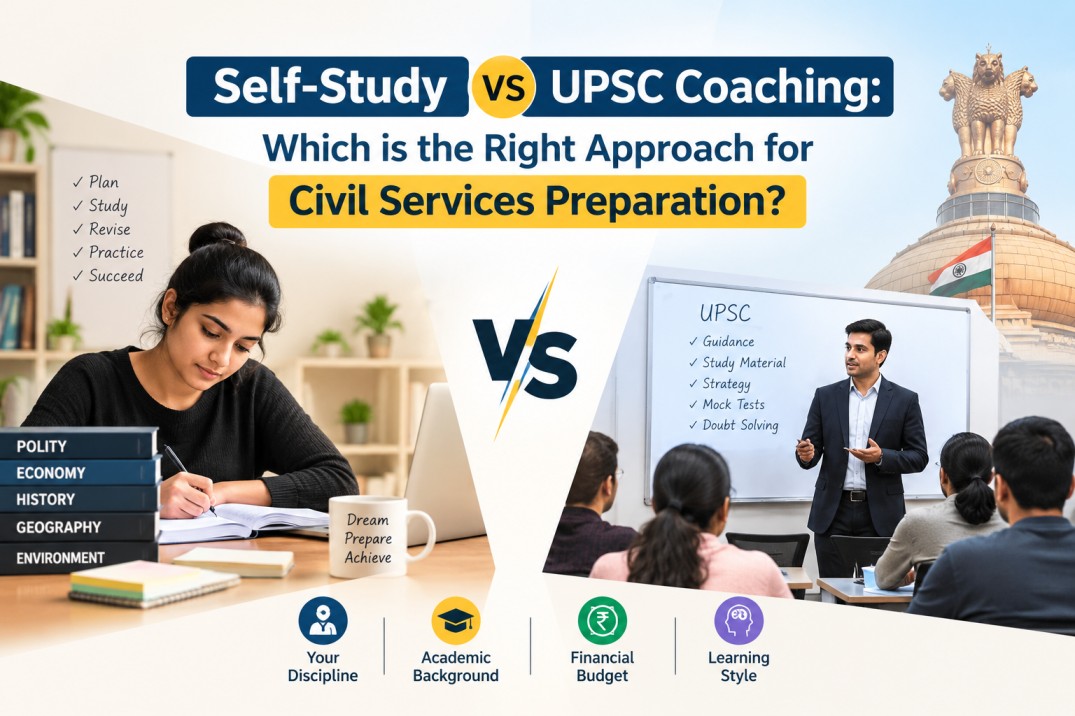
Every UPSC aspirant has a different way of studying. Some aspirants like to prepare via self-study, while others prefer a teacher who can guide them at every step. But when it comes to UPSC preparation, which way works better: self-study or coaching? That’s tough to answer because we can’t deny that aspirants have cracked the UPSC while doing self-study only. Both have their own benefits. The right choice depends on how you learn, how you plan your day, and the kind of help you need. Let’s understand both options and see which one suits your preparation best.
Self-Study for UPSC Preparation
Self-study means preparing for the UPSC examination on your own. You choose your books, make your timetable, study different subjects, and check your progress without attending regular coaching classes. For example, you can begin with NCERT books, read a newspaper, make short notes, and solve previous years’ question papers. If you do not understand a topic, you can use reliable online resources to learn more about it. The biggest benefit of self-study is that you can plan everything according to your needs. However, you must stay disciplined and know what to study each day.
Benefits of Self-Study
Self-study gives you more control over your preparation. You can decide your study hours and change your plan whenever needed.
- Flexible timings: You can study in the morning, afternoon, or evening. This is helpful for students who are working or studying in college.
- Lower cost: You can use library books, free online lectures, and other learning resources. You do not need to pay regular coaching fees, although books and test series may still cost money.
- Study at your own speed: If you find a topic difficult, you can spend more time on it. If you understand easily, then you can start a new topic without wasting your time.
These benefits make self-study a good option for students who can manage their time and follow a routine.
Challenges of Self-Study
The biggest problem with self-study is knowing where to start. The UPSC syllabus covers many subjects, and beginners may find it difficult to choose the right books and make a proper timetable. You may also struggle to understand difficult topics without a teacher. Another problem is staying regular. When nobody checks your progress, it can be easy to postpone revision or avoid practice tests. To manage these challenges, start with the official syllabus, choose a few reliable books, and set daily study targets. Take regular tests to check whether your preparation is moving in the right direction.
Coaching for UPSC Preparation
Coaching provides guidance for UPSC preparation through both online and offline classes. Teachers explain different subjects and help you understand the topics covered in the UPSC syllabus. Depending on the programme, coaching may also include study material, tests, answer-writing practice, and doubt-solving sessions. For example, if you find the Indian Constitution difficult to understand, a teacher can explain its basic concepts using everyday examples, making the topic easier to learn. If you are wondering, “Which best IAS Coaching in Delhi Should I Join for Structured Preparation?”, look for an institute that offers experienced faculty, a well-planned syllabus, regular tests, and consistent guidance. However, attending classes is only one part of preparation. You must also revise your lessons, read standard books, and practise questions independently to strengthen your UPSC preparation.
Benefits of Coaching
Coaching can make preparation easier for students who need a clear plan and regular guidance. These benefits can help beginners understand the examination and follow a more organised study routine.
- A clear study plan: UPSC Coaching classes usually follow a timetable. This helps you understand which topics to study and when to complete them.
- Help from teachers: You can ask questions when you do not understand a topic. Teachers can explain difficult ideas in simpler words and help clear your doubts.
- Tests and answer-writing practice: Many programmes include tests that help you check your preparation. Answer-writing practice can also teach you how to organise your thoughts and write clear answers within the given time.
Challenges of Coaching
Aspirants who are not economically strong can not afford coaching; students who are attending offline coaching need to spend time on travelling as well, and fixed class timings can make preparation difficult for students who are working or studying in regular colleges.
Self-Study vs Coaching for UPSC: Key Differences
Both approaches can help you prepare, but the main difference is how you organize your studies and get help when needed. Self-study gives you more freedom, while coaching offers more guidance. Neither method guarantees success. Your effort and the way you use your study time also matter.
|
Factor |
Self-Study |
Coaching |
| Timetable | You make your own schedule. | Classes usually follow a fixed schedule. |
| Cost | Usually more affordable. | Course fees can be higher. |
| Learning | You study independently. | Teachers explain topics in class. |
| Doubts | You find answers through books or other resources. | You can take help from teachers. |
| Tests | You arrange your own practice. | Tests may be included in the course. |
Which approach Works Better for Different Aspirants?
Cracking the Civil Services Examination requires a well-planned preparation strategy. Neither self-study nor coaching is the best choice for everyone; the right approach depends on your self-discipline, academic background, budget, and preferred learning style. The right choice depends on your situation. Before deciding, think about your current preparation level and the kind of support you need.
If You are a UPSC Beginner
Beginners often need help in understanding the syllabus and what books to choose. Coaching can provide you with a clear starting point and explain basic concepts. However, you can also begin with self-study. Read the official syllabus, look at previous years’ questions, and start with NCERT books. If you can understand the subjects and follow a timetable, you may be able to prepare independently.
If You are Preparing along side a Job
Working professionals have limited time because they must manage their jobs and studies together. Self-study allows them to choose study hours that fit their routine. If a subject is difficult to understand, selected online classes may help. The main aim is to create a practical timetable that you can follow without skipping revision.
If You Have Already Covered the UPSC Syllabus
If you have studied the main subjects, you may not need to join a complete coaching programme. Your focus should be on revision, mock tests, and answer-writing practice. If you are weak in a particular subject, you can take help only in that area. This allows you to focus on your actual needs instead of repeating topics you already understand.
Can You Combine Self-Study and Coaching?
Yes, you can use both methods together. IAS Coaching can help you understand a topic, while self-study allows you to revise and practise it. For example, after attending a History class, read your notes again and solve related questions. If you make mistakes, return to the topic and understand what you missed. You can also study most subjects independently and take classes only for difficult topics. This approach gives you guidance where needed while leaving enough time for personal study. The key is to avoid attending too many classes. You need time to understand what you learn and use that knowledge to answer questions.
How to Make Your UPSC Preparation Effective?
No matter which method you choose, a few simple habits can help you prepare and make your preparation easier. Always be consistent and follow a realistic study plan that you can follow daily.
Understand the UPSC Syllabus
Read the official UPSC syllabus before choosing your books. It tells you which subjects and topics you need to cover and helps you avoid studying unrelated material.
Choose the Right NCERTs Books
Do not collect too many books for the same subject. Start with NCERT books and selected standard resources. Study them properly and revise them regularly.
Practice Previous Years Questions
Previous years’ question papers show you how UPSC asks questions. They also help you understand whether you can use what you have learned to solve problems.
Revise Regularly
Reading a chapter only one time is not enough. Revise your notes and solve questions to remember the main points. Take mock tests and review your mistakes so you know which topics need more work.
How Can Vajirao & Reddy IAS Institute Help?
Aspirants who need classroom guidance can explore the courses offered by Vajirao & Reddy IAS Institute. They offer structured programmes that can help students follow a study plan and learn different subjects with UPSC faculty support. Before choosing a course, consider your preparation level, available time, and learning needs. Beginners can enrol in a comprehensive programme, while students who have already covered the syllabus may need more focused support. Even after joining coaching, you must study independently. Revising lessons and practising questions will help you understand topics better and prepare for the examination.
Conclusion
Self-study is suitable for aspirants who can make their own study plan and follow it regularly. Coaching may help students who need teacher guidance, a fixed schedule, and regular practice tests. You can also combine both approaches according to your needs. Before making a decision, consider your budget, daily routine, and your preparation level. Remember, joining coaching does not guarantee success, and studying alone does not mean you cannot succeed. Choose the method that helps you learn better, stay consistent, and prepare with confidence.

Vikash is a Current Affairs Expert specialising in UPSC and IAS exam preparation. He simplifies complex national and international developments into clear, exam-oriented insights. His content connects current affairs with the UPSC syllabus and focuses on analysis, facts, and answer writing to help aspirants prepare effectively for the Civil Services Examination.