
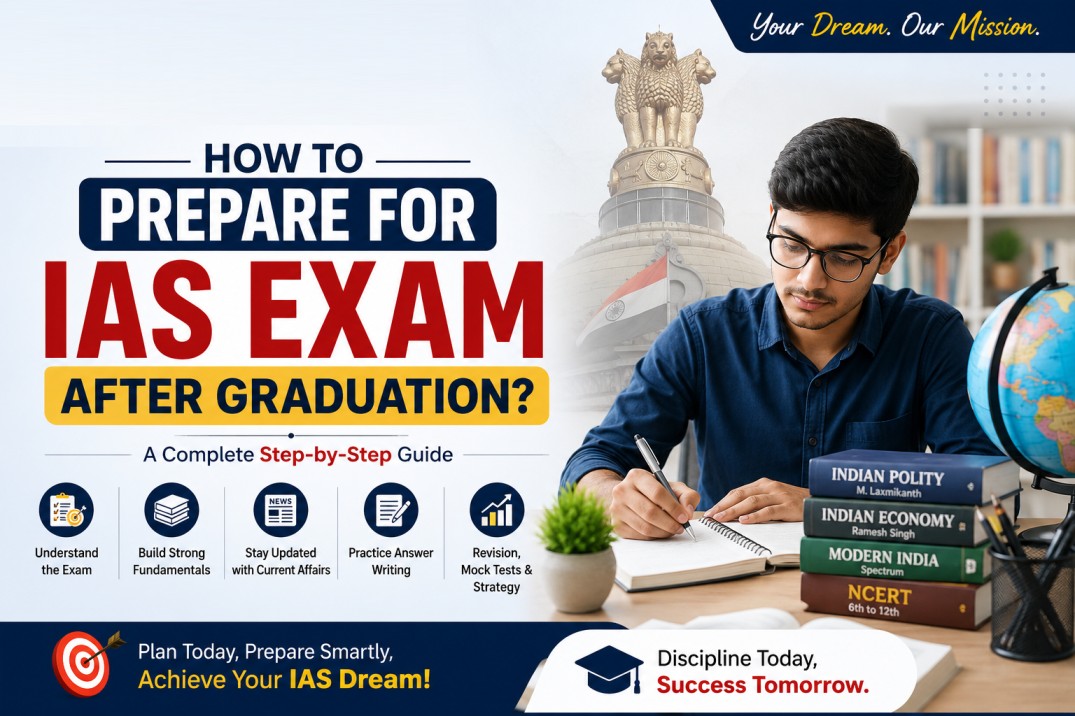
Preparing for IAS exam after graduation starts with understanding the official UPSC syllabus, strengthening your fundamentals through NCERT books, and staying updated with current affairs by reading newspapers daily. Many successful aspirants emphasize that cracking the UPSC Civil Services Examination requires developing a well-rounded personality, strong analytical skills, and a broad knowledge base not just memorizing textbooks. A well-planned strategy, consistent study routine, and regular revision are essential for success. Begin by understanding the latest UPSC syllabus and exam pattern, then move from NCERT books to standard reference books. Read a national newspaper daily, make concise revision notes, solve previous years’ question papers, attempt regular mock tests, and practice answer writing for the Mains examination.
If you are looking for expert guidance, exploring the Top IAS Coaching in Delhi can help you compare experienced faculty, quality study material, mentorship, and test series to choose the institute that best supports your UPSC preparation. Choose your optional subject carefully based on your interest and strengths. Follow a realistic study timetable, and revise regularly. With discipline, patience, and continuous practice, you can steadily improve your UPSC preparation and increase your chances of cracking the UPSC Civil Services Examination.
Top 8 Strategy to Prepare for IAS Exam After Graduation
Graduation is one of the best stages to start your IAS preparation. You have enough time to build strong fundamentals, develop answer-writing skills, and prepare systematically for all three stages of the UPSC Civil Services Examination. With the right strategy, consistent effort, and disciplined study routine, you can significantly improve your chances of becoming an IAS officer. This guide explains how to prepare for the IAS exam after graduation in a structured and practical way:-
1.Understand the UPSC Exam Pattern and Syllabus
To prepare for the IAS exam after graduation, the first step is to understand the complete UPSC Civil Services Examination process, which consists of three stages: the Preliminary Examination, the Main Examination, and the Personality Test (Interview). A clear understanding of the UPSC Exam Pattern and syllabus helps you plan your preparation effectively, prioritize important topics, and follow a structured study strategy from the very beginning. The first step is to understand what the UPSC Civil Services Examination demands. The exam consists of three stages:-
- UPSC Preliminary Examination (Objective)
- UPSC Main Examination (Descriptive)
- UPSC Personality Test (Interview)
Download the latest UPSC syllabus and go through every topic carefully. The syllabus should become the foundation of your preparation. It helps you avoid unnecessary study material and stay focused on important topics.
2.Build a Strong Foundation with NCERT Books
Preparing for the IAS exam after graduation begins with thoroughly understanding the official UPSC syllabus, building a strong conceptual foundation through NCERT books (Classes 6-12), and staying updated with current affairs by reading a national newspaper every day. This combination helps aspirants develop the knowledge, analytical skills, and awareness needed to excel in all three stages of the UPSC Civil Services Examination. These books develop conceptual clarity in subjects like History, Geography, Polity, Economics, Science, and Environment. After completing NCERTs, move to standard reference books for each subject. Focus on understanding concepts rather than memorizing facts. A strong foundation makes advanced topics much easier to learn.
3.Create a Realistic Study Plan
Preparing for the IAS exam after graduation requires a well-structured 12-18 month UPSC Study Plan. Divide your preparation into three phases: first, build a strong foundation with NCERT books and basic concepts; second, cover the General Studies syllabus while following current affairs daily; and finally, focus on intensive revision, answer writing practice, and regular mock tests to improve accuracy, speed, and exam readiness. A well-planned schedule keeps your preparation organized. Divide your day into dedicated study sessions for static subjects, current affairs, revision, and answer writing. A balanced daily routine may include:-
- 6-8 hours of focused study
- 1-2 hours of newspaper reading and current affairs
- Daily revision of previous topics
- Weekly mock tests and performance analysis
Consistency matters more than studying for long hours occasionally.
4.Read Newspapers and Follow Current Affairs
Preparing for the IAS exam after graduation requires consistent current affairs preparation through reliable Top 5 News Papers such as The Hindu or The Indian Express. Read the newspaper daily, make concise notes on important topics related to governance, economy, international relations, science, environment, and social issues, and revise them regularly. Along with monthly current affairs compilations, aim to cover at least 12-18 months of important national and international developments before the examination. Current affairs play an important role in every stage of the UPSC exam. Read a reputed national newspaper every day and make short notes on important developments related to governance, economy, international relations, science, environment, and social issues. Monthly current affairs magazines and government reports can also help strengthen your preparation.
5.Choose the Right Optional Subject
Choosing the right optional subject for the IAS exam is a crucial decision that can significantly impact your UPSC Mains score. Select an optional based on your interest, academic background, and its overlap with the General Studies syllabus. Also consider factors such as the availability of quality study material, expert guidance, previous years’ question papers (PYQs), and the time required to complete the syllabus. For example, if you choose Geography, learning How to Ace Geography Optional with Previous Year Questions (PYQs) can help you understand question trends, identify high-weightage topics, and improve your answer-writing strategy. Your optional subject contributes significantly to your Mains score, so choose one that matches your strengths and long-term interests. Do not select an optional simply because it is considered “scoring” or because others recommend it. Instead, pick a subject you genuinely enjoy and can prepare consistently over a long period.
6.Practice Answer Writing and Mock Tests
Preparing for the IAS exam after graduation requires a systematic approach that includes mastering the UPSC syllabus, building strong fundamentals with NCERT books, and consistently Practice Answer Writing along with regular mock tests. Focus on key milestones such as understanding the exam pattern, staying updated with daily current affairs, analyzing previous years’ question papers, and revising regularly. Following a structured study plan and tracking your progress will help improve both conceptual clarity and exam performance. Knowledge alone is not enough in UPSC Mains. You must learn how to present your answers within the given time. Start answer writing after completing the basics. Practice previous years’ questions regularly and join a quality test series if possible. Evaluate your answers to improve structure, presentation, and analytical thinking. Mock tests also help improve time management and identify weak areas before the actual examination.
7.Revise Regularly
Regular revision is one of the most important aspects of IAS preparation after graduation. Since the UPSC Civil Services Examination covers a vast syllabus, revisiting topics at regular intervals helps improve retention, strengthens conceptual clarity, and enhances recall during both the Prelims and Mains examinations. Instead of continuously reading new material, allocate dedicated time each week to revise your notes, NCERT books, standard reference books, and current affairs. Maintain concise notes for quick revision and revisit them multiple times before the exam. You should also revise UPSC Previous Years Questions (PYQs) Papers and mock test mistakes to avoid repeating the same errors. Revision is essential for long-term retention. Make concise notes during your preparation and revise them multiple times. A simple revision cycle can include daily, weekly, and monthly revisions. This approach strengthens concepts and reduces last-minute stress.
8.Stay Motivated and Maintain Discipline
Staying motivated and maintaining discipline during IAS preparation after graduation requires following a consistent daily study routine, setting realistic short-term goals, and regularly tracking your progress. Taking short breaks, maintaining a healthy lifestyle, and celebrating small achievements can help you stay focused, avoid burnout, and remain productive throughout your UPSC preparation journey. IAS preparation is a long journey that requires patience and determination. Avoid comparing your progress with others. Maintain a healthy lifestyle, take short breaks, exercise regularly, and get adequate sleep to stay productive. Remember that steady progress over several months is far more valuable than short bursts of intense study.
Why Graduation is the Best Time to Start IAS Preparation?
Graduation is one of the best times to begin IAS preparation because it gives you enough time to study without the pressure of a full-time job. Starting early allows you to build strong fundamentals, understand the UPSC syllabus in depth, and develop essential skills like answer writing and current affairs analysis. Whether you choose self-study or coaching, disciplined preparation, patience, and continuous improvement are the keys to cracking the UPSC Civil Services Examination and achieving your dream of become an IAS officer. It also provides sufficient time for regular revision and mock tests, helping you prepare with confidence and minimize last-minute stress before your first UPSC attempt. Lets look at why graduation is the best time to start IAS Preparation:-
1.Build a Strong Foundation Early
Starting IAS preparation during graduation is one of the smartest decisions because it gives you sufficient time to prepare without the pressure of a full-time job. Early preparation helps you build a strong conceptual foundation, develop effective study habits, and cover the vast UPSC syllabus at a comfortable pace. It also allows ample time for current affairs, answer writing, revision, and mock tests, reducing last-minute stress and improving your chances of success in the Civil Services Examination. Start with NCERT books and standard reference materials to develop conceptual clarity in subjects like History, Polity, Geography, Economy, and Environment.
2.Take Advantage of Time and Flexibility
Graduation is the ideal time to begin IAS preparation because it provides enough time, greater flexibility, and fewer personal or professional responsibilities. Starting early allows you to build a strong academic foundation, understand the UPSC syllabus thoroughly, and develop essential skills such as time management, answer writing, and current affairs analysis. It also gives you sufficient time for revision and mock tests, reducing last-minute pressure and increasing your chances of success in the Civil Services Examination. Fresh graduates generally have fewer professional and personal responsibilities, allowing them to dedicate consistent hours to study. This extra time can be used for daily newspaper reading, current affairs preparation, answer writing practice, and regular revision without the pressure of managing a full-time job.
3.Develop Exam-Oriented Skills
The UPSC Civil Services Examination tests analytical thinking, writing ability, and decision-making skills. Starting preparation after graduation gives you enough time to improve answer-writing techniques, attempt mock tests, analyze previous years’ papers, and choose the right optional subject based on your interests and strengths.
4.Increase Your Chances of Success
Beginning your IAS preparation early allows for multiple rounds of revision and gradual improvement. With a disciplined study plan and consistent practice, you can cover the vast UPSC syllabus effectively and enhance your chances of clearing the UPSC exam in your first attempt.
Conclusion
Preparing for the IAS exam after graduation is one of the smartest decisions for aspirants who want to build a successful career in the Civil Services. With sufficient time to understand the UPSC syllabus, strengthen your fundamentals through NCERT books, stay updated with current affairs, and practice answer writing regularly, you can develop a strong foundation for all three stages of the examination. Follow a realistic study plan, revise consistently, and evaluate your progress through mock tests. If you are looking for expert guidance, you can also explore the Top 5 IAS Coaching Institutes in Delhi for Hindi Medium to compare faculty, study material, test series, and mentorship before choosing the institute that best suits your preparation needs.
