
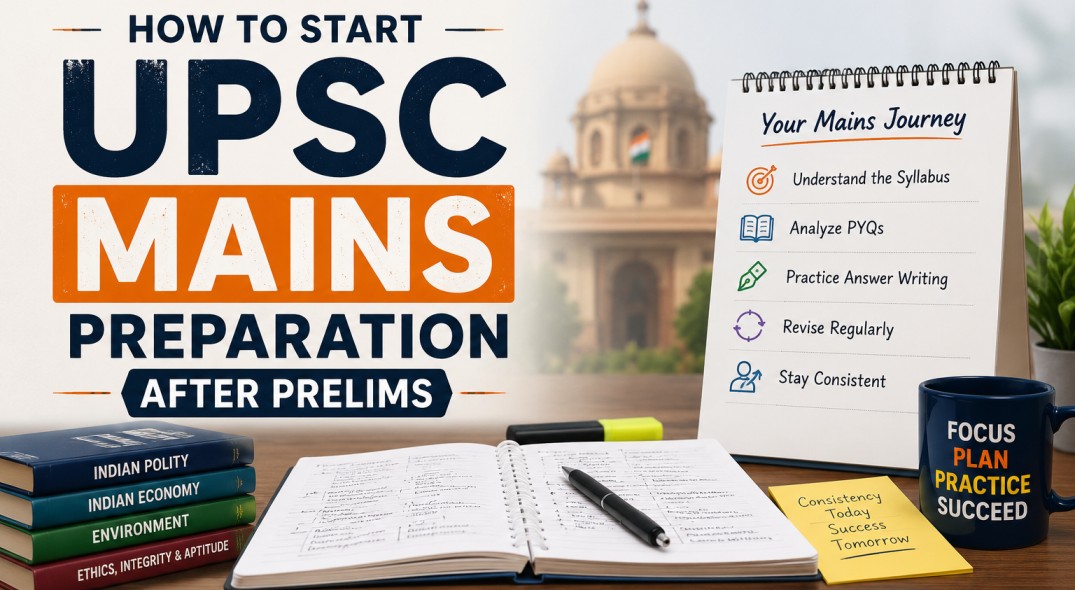
To kickstart your UPSC Mains preparation immediately after the UPSC Prelims exam, spend the first 2-3 days thoroughly analyzing the UPSC Mains syllabus and UPSC Previous Years Question Papers (PYQs) to understand important themes and question trends. Thereafter, devote 60-70% of your study time to your Optional Subject and Ethics (GS Paper IV) while simultaneously incorporating daily answer writing practice for General Studies. This balanced approach helps strengthen conceptual understanding, improve writing skills, and ensures systematic coverage of the UPSC Mains syllabus within the limited preparation period. The period immediately after the prelims is the most important phase for civil services aspirants. Instead of waiting for the prelims result, candidates should kickstart preparing for the UPSC mains examination without delay. The limited time between the two stages makes early preparation essential for completing the UPSC syllabus, strengthening concepts and improving answer writing skills.
How to Start UPSC Mains Preparation Immediately After Prelims Exam?
The UPSC Mains Examination is a descriptive test that evaluates analytical thinking, conceptual clarity, writing ability, and balanced decision-making. Since the syllabus is extensive, beginning preparation immediately after Prelims provides sufficient time for revision and practice. Beginning UPSC Mains preparation immediately after the Prelims Exam is essential, as aspirants typically have only 90-100 days before the Mains exam. This limited period must be utilized strategically to complete the extensive syllabus, strengthen the optional subject, practice full-length mock tests, and develop effective descriptive answer-writing skills. Let’s take a look at how to start UPSC Mains preparation after UPSC Prelims exam:-
1. Focus on the Official UPSC Mains Syllabus
The official UPSC Mains Syllabus should serve as the foundation of your preparation strategy. Plan your daily study schedule around the topics and keywords prescribed by the Union Public Service Commission (UPSC) to ensure focused preparation, avoid unnecessary resources, and maximize your chances of success in the Mains Examination. Avoid reading unnecessary resources and prioritize subjects based on their weightage in previous examinations.
2. Create a Structured UPSC Mains Study Plans
A well-structured UPSC Mains study plan requires a systematic and integrated approach covering all nine descriptive papers. Effective UPSC preparation focuses on building strong conceptual clarity in General Studies, developing expertise in the optional subject, practicing daily answer writing and integrating current affairs with static topics. Consistent revision, regular mock tests, and disciplined time management are equally important to ensure comprehensive syllabus coverage and improve overall performance in the UPSC Mains Examination.
3. Balance General Studies and Optional Subject
Maintain a balanced preparation strategy by giving adequate attention to both General Studies and your Optional Subject. Since General Studies carries 1,000 marks and the UPSC Optional Subject Papers contributes 500 marks, allocate your daily study time accordingly, with greater emphasis on GS while ensuring consistent progress in your optional. Utilize your most productive study hours for the Optional Subject to strengthen conceptual understanding, and dedicate the remaining time to General Studies, integrating current affairs with static topics and practicing answer writing regularly to improve analytical skills and presentation.
4. Set Weekly Targets
To excel in the UPSC Mains Examination, maintain a balanced preparation strategy for both General Studies (GS) and your Optional Subject. Study consistently for 7–9 hours each day, ensuring focused and productive learning. Set achievable weekly goals by covering one or two major syllabus topics, and reinforce your preparation through regular answer writing practice, revision, and self-assessment. This disciplined approach enhances conceptual clarity, builds writing speed, and improves overall exam readiness.
5. Analyze UPSC Previous Year Question Papers (PYQs)
UPSC Previous Year Question Papers help identify recurring themes, important topics, and changing question patterns. Regular PYQ analysis enables aspirants to understand the examiner’s expectations and prepare accordingly. Analyzing UPSC Previous Year Question Papers (PYQs) is one of the most effective ways to streamline your preparation. It helps you avoid unfocused study by identifying recurring high-priority topics, understanding the evolving pattern of questions, and recognising how UPSC integrates static concepts with dynamic current affairs.
6. Develop Answer Writing Skills
UPSC Mains answer writing is not just about accumulating knowledge; it is about effectively communicating that knowledge through clear articulation, logical structure, and efficient time management. One of the best answer writing tips is to first understand the exact demand of the question before presenting a well-organised, multi-dimensional response. High-scoring answers support arguments with relevant data, committee reports, examples, and contemporary developments while maintaining accuracy and completing the answer within the prescribed time limit.
7. Follow a Clear 3-Part Answer Structure
To score well in UPSC Mains, every descriptive answer should follow the proven Introduction-Body-Conclusion (IBC) framework. Avoid lengthy and complex paragraphs; instead, present your ideas through clear subheadings, structured bullet points, and precise language. A well-organised and reader-friendly answer improves clarity, enhances evaluation, and increases the chances of scoring higher marks.
8. Daily Free Mains Answer Writing Practice Program
Write one or two answers every day within a fixed time limit. Regular practice improves writing speed, presentation, and time management while building confidence for the examination. A consistent answer writing practice routine strengthens the core skills required to excel in UPSC Mains. It helps you develop well-structured arguments, effectively connect static concepts with current affairs, and enhance your ability to write high-quality answers within the exam’s strict time constraints.
9. Prioritize Revision and Prepare Short Notes
Mastering UPSC Mains requires transforming the vast syllabus into concise, answer-oriented micro-notes and following a systematic revision strategy, such as the 1-3-7 rule. The focus should be on developing quick recall, organising high-value facts, examples and data for easy access, and reducing dependence on bulky textbooks by creating efficient, exam focused study resources.
10. Revise Multiple Times
Effective UPSC Mains revision requires shifting from passive reading to active recall and application-based learning. Rather than repeatedly revisiting textbooks, focus on creating concise micro-notes, using spaced repetition techniques, and connecting static concepts with answer writing frameworks to improve retention, recall and exam performance.
Conclusion
Starting UPSC Mains Preparation after Prelims with a well-planned strategy can significantly improve your chances of success. Focus on the official UPSC syllabus, analyze UPSC Previous Year Question Papers (PYQs), practice answer writing consistently, prepare your optional subject thoroughly, and revise regularly. Seeking guidance from an experienced IAS coaching institute in Delhi can further strengthen your preparation through expert mentorship, structured study plans, and regular evaluation. A disciplined approach, combined with conceptual clarity and continuous practice, will help you perform confidently in the UPSC Mains Exam and move closer to achieving your dream of becoming an IAS officer and serving as a civil servant.
